Technogeeks X AI Sale – Learn More, Pay Less

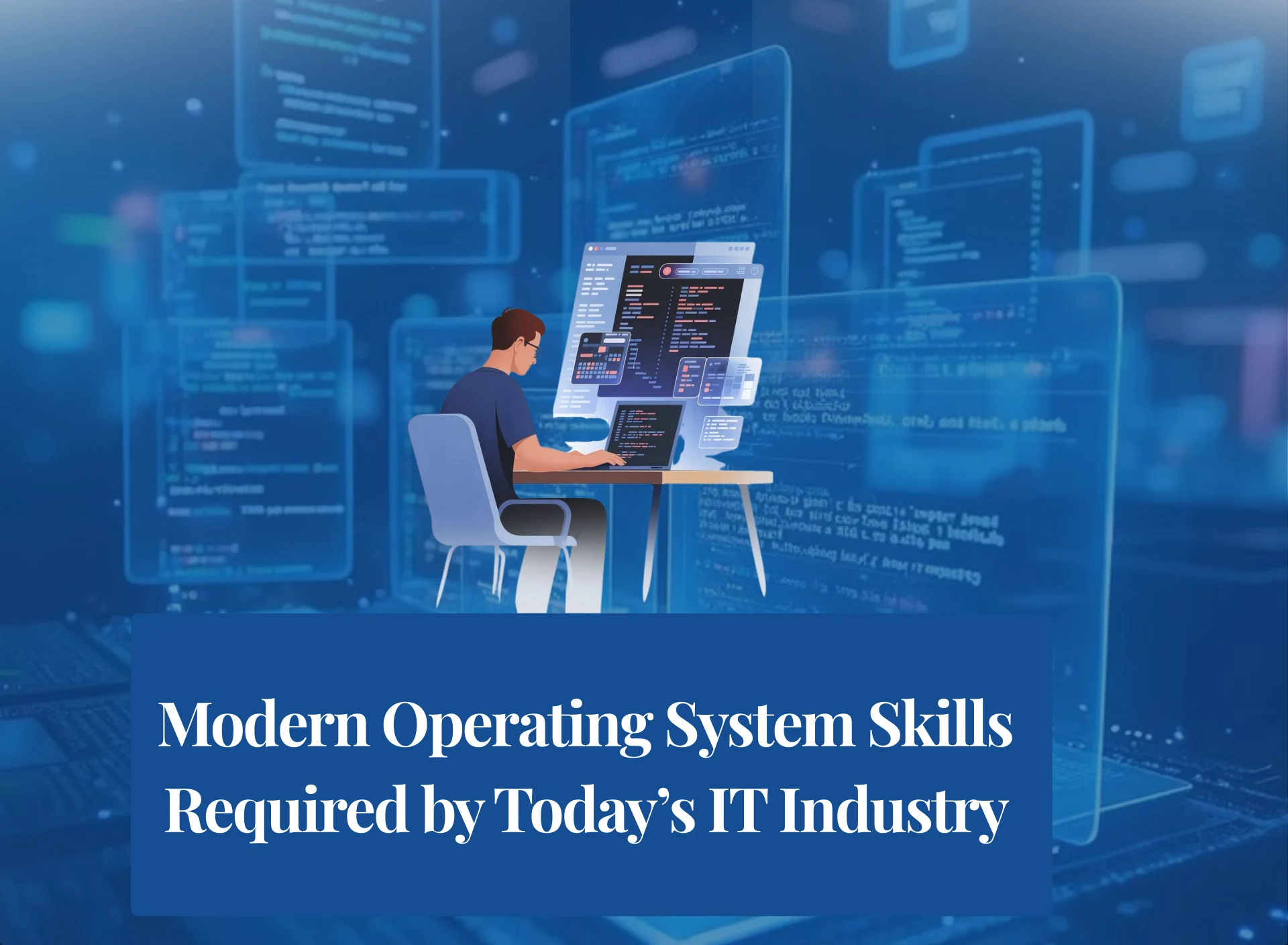
When I first started learning about computers the term Operating System confused me too and I wanted to clear my confusion so I started exploring OS and I started with the full form of OS is Operating System. Operating Systems are the basic step to enter in the world of computers, and how we can use technology in our daily lives. From turning on your mobile to turning off your laptop all these things are working because of the OS.
Many newcomers are now exploring IT careers and if you have a good knowledge it will give you a good benefit in your future. If you want to start your IT career in software development, cyber security, cloud computing, or IT support, understanding OS is your first step.
What is an OS? How does it work from the basic level? Why is it so important for every device? And should we learn it for study, jobs, or business growth?
In this Full form of OS complete beginner guide 2026, we will teach you and explain in a very easy or simple way so lets start.
Table of Contents For Full Form of OS – Definition, Types and Functions 2026 Guide
- Theory of Operating System
- History and development of Operating Systems
- Easy Concepts of Operating System
- Different types of Operating Systems
- Functions of Operating System
- Components of Operating System
- OS we use
- How Operating System Works
- Good and Bad side of Operating System
- Real life uses of an OS
- Career Options in Operating Systems
- Conclusion
1. Theory of Operating System
What is Operating Systems?
OS stands for Operating System. An OS helps us to connect with a computer, laptop or Mobile phones. An OS is just like a bridge that connects user and hardware. When we use a smartphone and laptop to open apps, play games and use google to search, the OS manages everything in the background and makes sure that tasks run smoothly or not.
Why Operating System is Important
An operating system is important because without an operating system computers and mobile phones can not work properly. It handles all the basic operations of a system and makes it easy for us so we can use devices.
- It take care hardware like CPU, memory and storage.
- With the help of OS we can run applications like browsers and software.
- It gives us a user-friendly interface (like icons and screens).
- It ensures security check and proper use of system resources.
2. History and development of Operating Systems
Early Computing Systems
Honestly, when I first read about how an early computer worked without an OS I was literally shocked. We have to give tasks manually using punch cards. These systems were too slow, complex and difficult to use. There was no automation at that time and only one task we could perform at a time.
Development of Modern Operating Systems
After sometime we develop building systems and due to that OS become more advanced and user friendly. Continuously we developed it and we got new features like multi-tasking, networking and graphical user interface (GUI). These updates made computers easy so we can use them easily and made them more powerful like Linux, macOS, Microsoft and Windows.
Future development in Operating Systems
According to me, operating systems will become smarter with the help of AI integration and we can get better security and faster performance and it will become more easy to use for us. They will support cloud computing, automation and smart devices. Mobile OS like Android and iOS continuously evolving with the new features.
3. Easy Concepts of Operating System
Hardware vs Software
I think we should discuss hardware and software . Hardware refers to physical parts of a computer like mouse, keyboard, CPU and monitor. Software indicate to programs and applications that run on the computer. The operating system helps to connect both and work together so that they can work smoothly.
Kernel and Shell
The Kernel is the resource of the OS. It controls memory, hardware and processes.
The Shell is the outer layer that connects with the user. It takes commands from the user and sends that command to the Kernel.
What do you mean by User Interface (CLI vs GUI)
The UI allows the user to connect with the system
- CLI (Command Line Interface) : Users type the command (Text based).
- GUI (Graphical User Interface) : Users can interact using icons, windows and mouse.
4. Different types of Operating Systems
Batch Operating System
In a Batch OS we don't have to sit and don't control every task manually. SOme tasks are collected into groups and run automatically one after one. I know it's slow but good for large jobs and takes time to get a better result.
Time-Sharing Operating System
A Time sharing OS is like a teacher in a classroom. Instead of helping one student at a time, teachers quickly move from one desk to another to give little attention to every student. The OS does the same thing.
Distributed Operating System
In Distributed OS it is like a team of people working on the same project from different different locations. Each person has their own computer but still they share all resources and work together. The result is to get better performance and decrease chances to get failure.
Network Operating System
A Network OS helps us to connect computers so we can share files, printers and data with each other. There are no more copying files on a USB drive and walking one room to another room for data.
Real-Time Operating System (RTOS)
This OS is very fast and we have high chances to get better responses. It is mostly used in critical systems like medical devices, robots and traffic control.
Mobile Operating System
The Mobile OS is generally created for smartphones and tablets.
Ex- Android and iOS
5. Functions of Operating System
Process Management
The OS manages all running programs. It will decide which task to run first and try to make smooth multitasking.
Memory Management
If you think RAM is like a work desk. When you open an app, the OS clears space on that desk for it and when you close it, the space will get free for something else.
File System Management
The OS organizes properly files and folders. It helps us to create, delete, store, and access data easily.
Device Management
It controls hardware devices like keyboard, mouse ,monitor and printer using drivers.
Security and Access Control
In my words it is like a gate keeper who can pass only who has passwords and authority to access.
Resource Management
The OS manages all system resources like CPU, storage and memory so that they can distribute them properly to different tasks.
6. Components of Operating System
Kernel
If the OS were a restaurant, the kernel is the kitchen. Customers never walk in there, but without it, food never reaches the table.
File System
Lets think you create a file and save a document, download a photo, or create a new folder the file system keeps it organized.
Device Drivers
Device drivers are like travel guides in a foreign country. You don't speak the local language but the guide knows they help to understand local languages just like in OS it helps to communicate with hardware devices.
System Calls
When we install any apps in our system it takes permissions like file storage, using your camera. It can't take it directly and it will ask the OS first that request is called a System call.
7. OS we use
Microsoft Windows
When I started to use a computer I used Microsoft Windows because on my time mostly people use this because it gives us graphical interface and support.
Linux
Honestly Linux is underrated because when I was a beginner I avoided it because I think it's too hard but it pays to learn it early. Linux is an open source operating system it is also known for its security and flexibility. It is mostly used by developers, servers in cybersecurity.
macOS
macOS was launched by Apple and only used in Mac computers.I will be honest, when I first switched to a Mac for a short period I felt the experience because of its clean performance, design and strong security.
Android
Android is the most commonly mobile operating system and it is mostly used in smartphones. It is flexible and supports a larger number of apps.
iOS
iOS is the Apple mobile operating system and used in iPhones. iOS provides high performance, more secure, and user experience.
8. How Operating System Works
Booting Process
When we turned on the computer, first the OS started and loaded into memory. This process we say booting. It checks the hardware and prepares the system to use.
It's like us when we wake up from the sleep we need a few seconds to wake up properly before using the body.
Process Execution
The OS runs the program by loading them into memory and using the CPU. It manages multiple tasks at the same time, so we can use apps smoothly.
Resource Allocation
When any program runs on your computer needs CPU, memory, and storage. The OS handles all of this in the background and makes sure the program gets resources that it requires and completes it without conflict.
9. Advantages and Disadvantages of Operating System
| Advantages | Disadvantages |
|---|---|
| OS makes computer easy to use with user friendly interface | Some operating systems are too expensive |
| It allows for multitasking | Sometimes it can be complex for beginners to understand |
| Manages hardware and software continuously | It will make slow down if too many process run at same time |
| It provides security and data protection | It can be affected from viruses and security attacks |
| It helps to programs run smoothly | Require regular updates and maintenance |
10. Real life uses of an OS
Personal Computers
I am writing this and you are reading this on your system and thats happen because of an OS
Ex-
Microsoft Windows and macOS
Mobile Devices
Every app we open, every swipe we do, every notification we receive are all managed by a mobile OS
which is silently running in the background.
Ex- Android and iOS
Servers and Cloud Computing
OS are used in servers to manage large size data, networks, and websites. Systems like Linux are mostly used in cloud computing and data centers.
Embedded Systems
Operating systems are used in devices like ATMs, smart TVs, cars and washing machines to run tasks in a simple and effective way.
11. Career Options in Operating Systems
System Administrator
We have to manage and keep updating computer systems, servers and check also everything runs smoothly and fix all technical problems.
OS Developer
An OS Developer makes designs, builds operating systems and we have to keep the system updated. For this role you should have strong programming skills and system knowledge.
Cloud Engineer
In Cloud Engineering we work with cloud platforms and servers. We have to maintain online data, applications, and infrastructure using operating systems.
Cybersecurity Specialist
The main task of cyber security is to keep your systems safe from hackers and threats.They focus on security, data protection, and protected systems.
12. Conclusion
Summary of Key Points
When I first started writing this blog, my goal was simple to give beginners a complete and honest introduction to how the OS actually works. Many people start their career with incomplete knowledge and that can hold them back. In this blog I tried to cover everything from the basics I share with you real life applications and I also share some career options with you all in the simplest way I could.
Future Scope of Operating Systems
There are more chances in the upcoming time, operating systems will become more advanced with better security, faster performance, and AI integration. Operating systems will play a big role in cloud computing, smart devices and automation, creating more career options.