Technogeeks X AI Sale – Learn More, Pay Less
 Technogeeks X AI Sale – Learn More, Pay Less
Upgrade your skills with advanced AI courses from Technogeeks X AI.

Best Agentic AI Course: Multi-Agent Systems with CrewAI Training In Pune With 100% Placement Assistance
 Bestseller
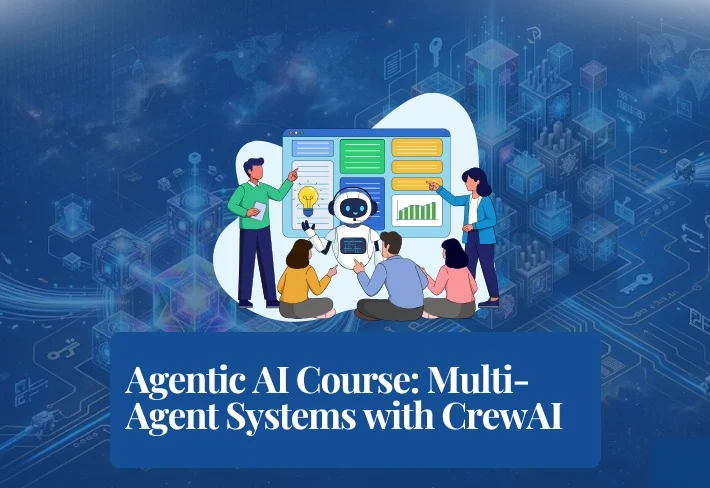
The Agentic AI Course with Multi-Agent Systems using CrewAI by Technogeeks X AI is designed to help students and professionals master the future of AI automation. This course focuses on building AI agents, autonomous systems, and multi-agent workflows that can think, plan, and execute complex tasks.
Starting from the fundamentals of multi-agent architecture, learners will understand how AI agents collaborate using advanced patterns like Planner-Executor-Critic, React reasoning, and tool-based decision making.
This hands-on training covers industry-leading frameworks such as CrewAI, LlamaIndex, and AutoGen, enabling students to build intelligent systems that can handle real-world automation, data analysis, and AI-driven workflows.
With the rise of Agentic AI and Generative AI technologies, companies are actively hiring professionals who can design AI agents, RAG systems, and autonomous AI solutions. This course prepares you for high-demand AI roles in startups and enterprises.
The Agentic AI Certification Course by Technogeeks X AI helps learners build intelligent systems that can plan, reason, collaborate, and execute tasks autonomously using multiple AI agents.
Agentic AI is the next evolution of artificial intelligence where AI systems act independently using tools, memory, and reasoning. These systems are widely used in AI automation, chatbots, research systems, and enterprise AI applications.
In this course, students will learn how to design multi-agent workflows where different agents perform roles like researcher, writer, reviewer, and executor to solve complex problems efficiently.
The program includes hands-on labs, real-world AI projects, and advanced agent orchestration techniques to prepare students for industry-level AI development.
Technogeeks X AI offers flexible learning modes for students and working professionals:
Choose weekday or weekend batches and start your journey in Agentic AI and Multi-Agent Systems.
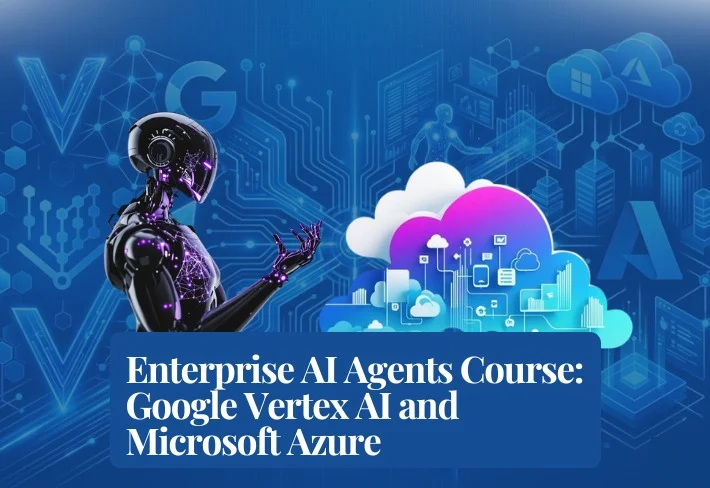
Enterprise AI Agents Course: Google Vertex AI & Microsoft Azure lets you build AI apps and automate workflows using enterprise-grade AI platforms.
AI Agent SaaS Training: Build & Launch AI Startup lets you build AI apps, automate workflows, and launch your own AI-powered SaaS business.

Ans:
Agentic AI refers to intelligent systems that can plan, reason, and act independently.
Multi-Agent Systems use multiple AI agents working together to solve complex tasks using collaboration, tools, and memory, widely used in automation, research, and AI applications.
Ans:
Yes, Agentic AI is one of the fastest-growing careers in AI and automation.
Companies are actively hiring AI engineers who can build AI agents, automation systems, and multi-agent workflows using tools like CrewAI, AutoGen, and LlamaIndex.
Ans:
The course covers modern AI agent frameworks and real-world applications.
Topics include Multi-Agent Architecture, CrewAI, LlamaIndex Agents, AutoGen, RAG, ColBERT, ReAct reasoning, tool integration, and AI workflow automation.
Ans:
Basic programming knowledge is helpful but not mandatory for beginners.
The course starts from fundamentals and gradually covers Python, AI tools, and frameworks needed to build AI agents and automation systems.
Ans:
Salaries depend on skills and experience in AI and automation.
In 2026, entry-level AI engineers earn ₹6–12 LPA, while experienced professionals in Agentic AI and multi-agent systems can earn ₹15–40 LPA or more.
Ans:
Yes, the course includes hands-on AI labs and real-world projects.
You will build AI agents, multi-agent systems, automation workflows, and a final project like a Multi-Agent Analyst System with reports and visualizations.
Ans:
Yes, placement and career support are included.
Students get resume building, portfolio projects, mock interviews, and job assistance for AI, ML, and automation roles.
Ans:
The course duration is approximately 30 hours.
It includes hands-on labs, AI projects, and practical training with frameworks like CrewAI, AutoGen, and LlamaIndex.
Ans:
This course opens multiple AI career opportunities.
Roles include AI Engineer, AI Agent Developer, ML Engineer, Automation Engineer, Prompt Engineer, and AI Solutions Architect.
Ans:
Yes, the course is designed for both beginners and experienced professionals.
Whether you are a student, developer, or working professional, you can learn to build AI agents and advance your career in Agentic AI.